

Eastserve went dark
Beswick, Clayton and Openshaw once had their own wireless web — cheap PCs, roof aerials, a portal that behaved like a town hall. The domain is for sale now. The story still loads from the archive.
For a stretch of the 2000s, if you lived in Beswick, Clayton or Openshaw and wanted the net without a landline you could afford, you went to eastserve.com. The domain is for sale now. The Wayback Machine still has the portal — access-point outages, £6 broadband, noticeboards, forums, job ads, a virtual town hall built for three wards that the market had written off.
It was not a lifestyle site. It was infrastructure with a homepage.
Wired up Communities
Eastserve began around 2000–01 as part of Beacons for a Brighter Future and the New Deal for Communities money pouring into East Manchester, plus the DfES Wired up Communities programme. The pilot offered hundreds of households cheap computers or set-top boxes and a way online. Electronic Government Minister Ian McCartney launched the site in March 2001. By the middle of the decade the project claimed thousands of PCs into homes, more than a thousand wireless connections, and a European reputation as one of the largest community Wi-Fi meshes of its kind.
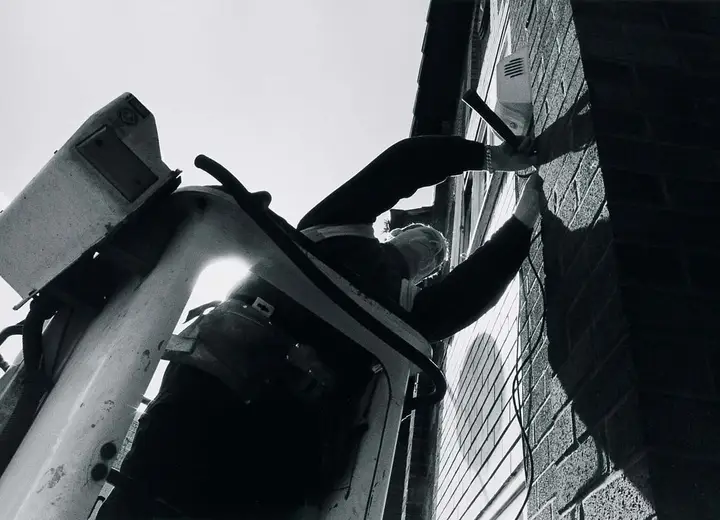
The hard problem was not the website. About a quarter of homes had no BT landline, and the exchange was not about to be upgraded for commercial ADSL. So Eastserve built its own wireless network: distribution points feeding sixty-odd access points, each talking to a small aerial on a customer’s wall or chimney. Engineer George Dale told East magazine that the speed you paid for was the speed you got — better than a phone line that crawled when the street logged on at once. From £6 a month for a basic always-on link; standing-order customers got their speed doubled. Reconditioned PCs for £50, new ones for £200, printer included, three months’ access, three hours’ free training, a helpdesk on a local call.
Sean McGonigle, then New Deal for Communities coordinator, told the Manchester Evening News that the project had already transformed ICT in Clayton, Openshaw and Beswick, and that NWDA and ERDF money was stretching it into Miles Platting, Ancoats, Newton Heath and Gorton. Bill Saxton, 66, became the first in Gorton to get a machine. “You really can teach an old dog new tricks,” he said.
The portal as town hall
eastserve.com was organised around residents’ lives, not council departments: Where I Live, My Computer, Crime and Safety, World of Work, Youth, a noticeboard, forums. Agencies plugged in — City Council, police, housing, job services. Anonymous low-level crime forms took hundreds of reports. Local editors kept pages warm. On a June day in 2006 the homepage apologised that the HOCC 2 access point was down and that CROSS and CIBA were having frequency trouble. Seventeen people were logged on. Ashton New Road was closed for works. Sportcity had tennis courses. Broadband was £6. That is what a neighbourhood network sounded like when it was alive.
Athol Few, project manager, put the innovation in the package rather than the radio: cheap kit, training, repairs, and the portal together. Peter Molduano Przychodzki, resident support officer, was blunter about the politics — online council services meant nothing if only 19% of homes had a computer. Eastserve was an attempt to stop digital exclusion deepening the old class one.
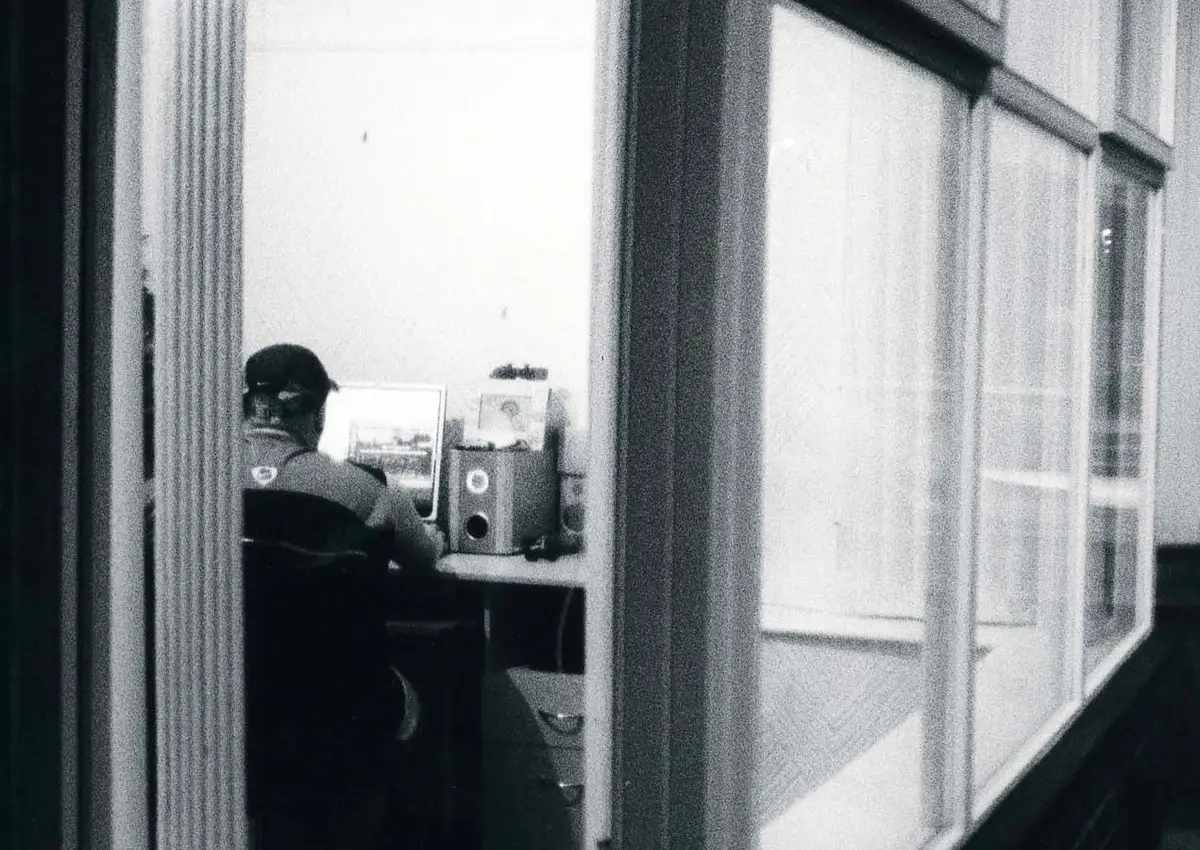
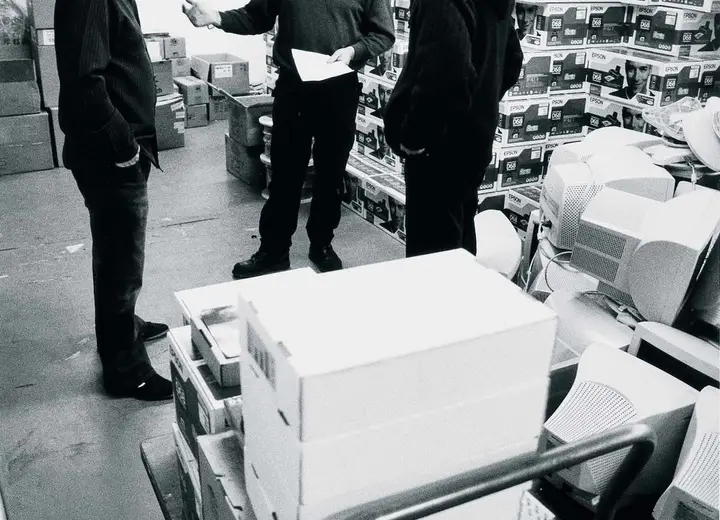
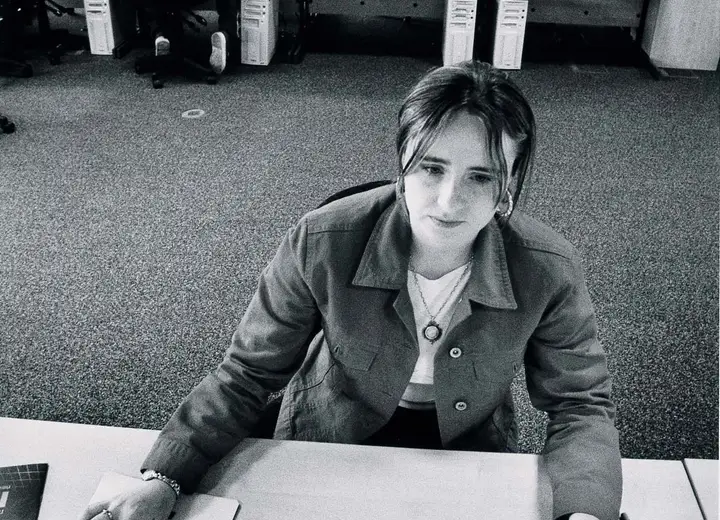
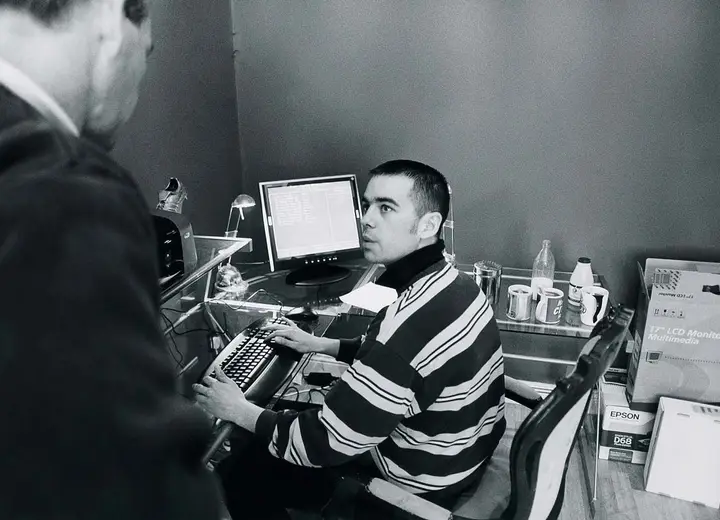
Len Grant photographed the installers for East magazine’s Summer 2006 issue — cherry pickers on brick terraces, warehouses of Epson boxes beside stacks of dead CRT monitors, training rooms, a bay window glowing after dark. The same magazines lived for a while on thisiseast.com, another East Manchester regeneration site that has since gone dark. The photographs still sit on Grant’s site; the portal they illustrated mostly does not.
What remains
Commercial broadband eventually made a community mesh less urgent. Funding models that needed to become “self-sustaining” by the late 2000s rarely stay romantic. The shop units, the aerials, the helpdesk numbers — gone with the contracts. What survives is the archived homepage, the evaluation numbers (thousands of first-time computer users, weekly logins for local news and email), and the stories: Carol who trained at MANCAT; Jed Shaw designing an Under-9s calendar and booking friendlies online while his son Gerard took the keyboard; Jenny Hesford answering residents on the Eastserve forum after she had already blocked the rat-run behind her Clayton street.
A parked domain looks empty. For a few years those pages were how East Manchester argued with itself after tea.
Domains get parked. Forums go quiet. What Eastserve proved was simpler than the e-government citations: if you put a computer, a wire, and a patient human on the same street, people use them. The Wayback Machine still has the homepage notices and the broadband tariffs. Len Grant’s frames still have the cherry picker. Together they are enough to remember that for a while East Manchester ran its own internet.